February 26, 2026
Shampoo in a Bar! Ditch the Bottle
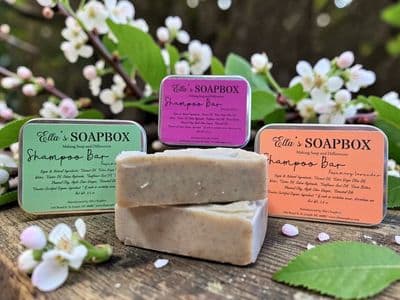
Why Handmade Shampoo Bars Made with Organic Ingredients Are Worth the Switch
If you've been curious about shampoo bars but weren't sure where to start, you're not alone. More people are making the switch from bottled shampoo to solid bars — and for good reason. They're better for the planet, gentler on your hair, and when they're made with organic oils and natural ingredients, they're a cleaner choice for your scalp and strands.
At Ella's Soapbox, our shampoo bars are handmade in small batches using certified organic coconut oil, olive oil, and castor oil, plus nourishing cocoa butter and sunflower seed oil. Every bar is crafted with intention — and 10% of every purchase supports anencephaly research and families experiencing pregnancy and infant loss.
What Makes a Shampoo Bar Different?
Unlike liquid shampoo, which is mostly water and synthetic detergents, a shampoo bar is concentrated, long-lasting, and made through a process called cold process soapmaking. We blend organic plant oils with sodium hydroxide (lye) and water to create a gentle, effective cleanser. The lye is completely transformed during saponification — none remains in the final bar.
Because the oils we use are organic and the process is chemical-free beyond the saponification reaction itself, you're left with a bar that's free from sulfates, parabens, silicones, and synthetic fragrance.
The Ingredients That Make It Work
Each shampoo bar is built around a concentrated blend of plant-based oils, butters, clay, and apple cider vinegar—ingredients chosen not just for label appeal, but for how they contribute to cleansing performance, lather quality, scalp feel, and overall hair finish.
- Organic coconut oil contributes strong cleansing power and helps generate the rich, bubbly lather that makes a shampoo bar feel satisfying to use.
- Organic olive oil brings a more conditioning profile, helping support softness and flexibility in the hair shaft.
- Organic castor oil is valued in solid formulations for boosting lather density and stability, creating a creamier foam and a more cushioned feel during washing.
- Organic cocoa butter adds richness and slip, helping the bar feel smoother in use while supporting softness and manageability.
- Organic sunflower seed oil offers lighter-weight nourishment and is naturally rich in fatty acids that help support a smoother, more conditioned feel.
- Apple cider vinegar is often used in hair care for its naturally acidic profile, which helps support a more balanced scalp environment and a smoother-looking finish.
- Rhassoul clay, a mineral-rich clay traditionally used in hair and skin rituals, helps gently lift away excess oil and buildup while maintaining a softer, more balanced cleanse.
Together, these botanicals and mineral-rich ingredients create a shampoo bar that lathers well, cleanses effectively, and leaves hair feeling refreshed, softer, and more balanced—without unnecessary extras.
Every ingredient is chosen for a reason — and every bar is made by hand, right here in Saint Joseph, Michigan.
Why People Love Shampoo Bars
Switching to a shampoo bar may seem simple, but the benefits go far beyond the format. Because shampoo bars are concentrated and water-free, they offer an efficient, low-waste alternative to traditional bottled shampoo—without sacrificing performance.
They’re long-lasting, with one bar often replacing multiple bottles of liquid shampoo, and their solid format makes them especially travel-friendly: no spills, no leaks, and no TSA hassle. They’re also a favorite for anyone looking to reduce plastic use, since they require minimal packaging and create far less waste than conventional hair care.
From a formulation standpoint, shampoo bars can also offer a gentler, more intentional cleansing experience. Without the added fillers common in liquid products, they rely on concentrated, functional ingredients chosen for lather, scalp feel, and hair finish. Many people find that after an adjustment period, their hair feels softer, shinier, and more balanced over time.
The result is a product that feels simple, but works hard—good for your routine, easy to travel with, and a thoughtful step toward lower-waste hair care.
How to Use a Shampoo Bar
If you’ve never used a shampoo bar before, the process can feel a little unfamiliar at first. The good news is that it’s actually very simple, and once you get used to it, many people find it becomes an easy, satisfying part of their routine. The biggest difference is that shampoo bars rely on water, technique, and a little patience—especially in the beginning.
1. Start with thoroughly wet hair
The first step is to make sure your hair is completely soaked. This matters more than people think. A shampoo bar works best on very wet hair because the water helps the bar glide more easily, creates better lather, and helps distribute the product evenly across the scalp. If your hair is only damp, the bar can feel harder to work with and you may end up using more than you need.
2. Apply the bar to your scalp or lather it in your hands
Once your hair is fully wet, you can either rub the bar directly onto your scalp or lather it in your hands first. Some people prefer to glide the bar over the scalp in a few sections—along the crown, sides, and back of the head—while others like to build up lather in their palms and then apply it. Either method works well. Direct application is often easiest for thick or dense hair, while hand-lathering can feel a little gentler and more controlled for fine hair or anyone new to shampoo bars.
3. Focus on cleansing the scalp
The scalp is where most oil, sweat, and buildup collect, so that’s where you want to focus your attention. Use your fingertips, not your nails, and massage the lather into your scalp using small circular motions. Take a little extra care around the hairline, crown, behind the ears, and at the nape of the neck—those are common places where buildup can hide. Once the scalp is well cleansed, the lather that rinses through the rest of the hair is often enough to clean the lengths.
4. Gently work the lather through your hair
If your hair is long, thick, curly, or tends to hold onto styling products, you can gently smooth some of the lather down through the lengths. There’s no need to scrub or pile the hair up on top of your head. A gentler approach helps reduce tangling and keeps the hair feeling smoother. If your ends are dry, it’s often best to focus the shampoo on the scalp and roots, then let the rinse water carry the cleanser through the rest.
5. Rinse very well
Rinsing thoroughly is one of the most important parts of using a shampoo bar successfully. Take a little more time than you think you need, and make sure water is reaching all the way through the scalp and underneath thicker sections of hair. If hair feels heavy, coated, or waxy afterward, incomplete rinsing is often the cause. Lifting sections of hair while rinsing can make a big difference.
6. Follow with conditioner or an apple cider vinegar rinse if needed
Depending on your hair type, you may want to follow with conditioner or a diluted apple cider vinegar rinse. Conditioner can help with softness and detangling, while an acidic rinse can be especially helpful for people using soap-based shampoo bars. Because soap is naturally more alkaline, a light vinegar rinse may help the hair feel smoother and more balanced. A simple rinse can be made with 1 to 2 tablespoons of apple cider vinegar in 1 cup of water.
7. Give your hair time to adjust
If you’re switching from conventional shampoo, your hair may need a little time to adapt. Many bottled shampoos contain silicones, synthetic detergents, and conditioning agents that leave behind a very specific feel. With a shampoo bar, especially in the first week or two, you might notice your roots feel oilier than usual or your hair feels a little different in texture. That adjustment period is normal for many people. As your scalp rebalances and old buildup washes away, hair often begins to feel softer, lighter, and more naturally balanced.
8. Use more water, not more product
One of the most common mistakes people make with shampoo bars is using too much product too quickly. If the bar feels draggy or the lather seems hard to spread, the answer is usually more water—not more shampoo. A few swipes of the bar are often enough. Once you learn how much your hair needs, the process becomes much easier and the bar lasts much longer.
9. Store the bar properly between uses
To help your shampoo bar last, keep it dry between uses. Store it on a draining dish or surface where air can circulate around it, and avoid leaving it in standing water. If you use a tin for travel, let the bar dry first before sealing it up. A well-drained bar will last longer, perform better, and stay much firmer over time.
10. Be patient—it gets easier
Like any new routine, there can be a learning curve. But once you figure out the right amount of water, product, and rinsing for your hair type, shampoo bars can be a simple, effective, and low-waste alternative to bottled shampoo. Many people end up loving not just the results, but the whole ritual of it.
Made with Purpose
Every shampoo bar from Ella's Soapbox is more than just a product. It's part of a mission. 10% of every purchase goes directly to organizations supporting anencephaly research and families navigating pregnancy and infant loss — causes close to our hearts.
When you choose a handmade shampoo bar made with organic ingredients, you're choosing transparency, quality, and a brand that gives back.
Ready to make the switch?
Shop Shampoo Bars and feel good about what you're putting on your hair — and the difference you're making with every purchase.